Cupping and Gua Sha
Both cupping and gua sha have been used for thousands of years across traditional Chinese and East Asian medicine. The tools and names have carried forward; our understanding of why they work has evolved alongside modern science. Both techniques work with the superficial layers of tissue, including skin, fascia, and the fluid-filled spaces in between them, using a mechanical force to shift what has become stagnant, compressed, or restricted.
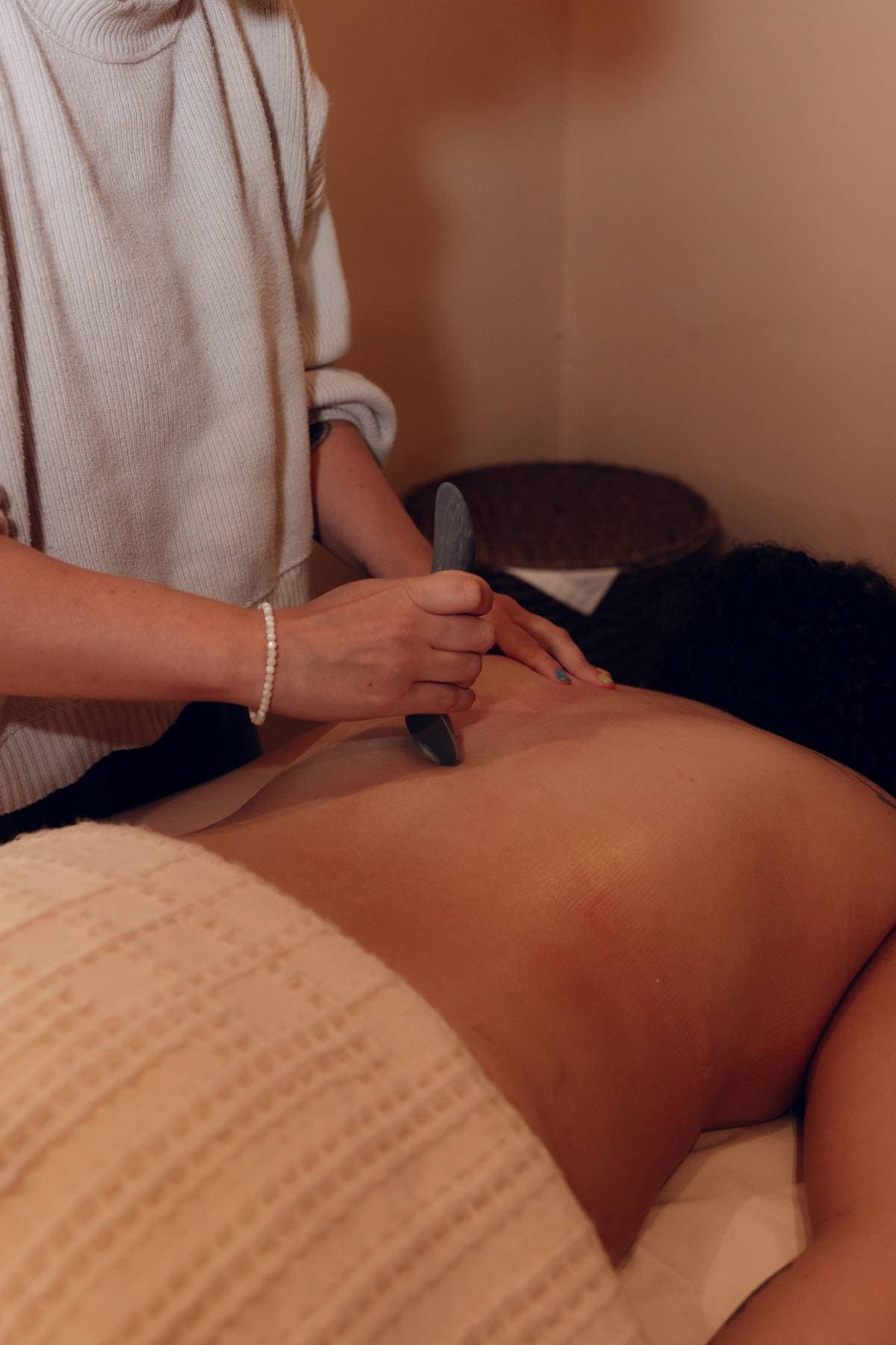
Where most manual therapy pushes into the tissue, cupping and gua sha work differently. Cupping lifts the tissue through suction, creating space and decompression in the layers beneath. Gua sha uses a smooth tool drawn across the skin to mobilize the connective tissue underneath and encourage glide and circulation among the tissue. The result in both cases is increased blood flow, reduced tightness, and a shift in the tissue environment that moves it from chronic stagnation to active healing.
Research has supported both techniques for reducing pain, improving tissue mobility, and decreasing inflammation.
Both techniques can leave temporary marks on the skin that range from light redness to purple bruising that typically resolves within a few days. This is not injury, but visible evidence of increased circulation that the tissue needed.